Medical prescription in time-critical clinical contexts.
My Role
UX/UI Designer
Project Type
Mobile App
Timeline
April 2025 - April 2026
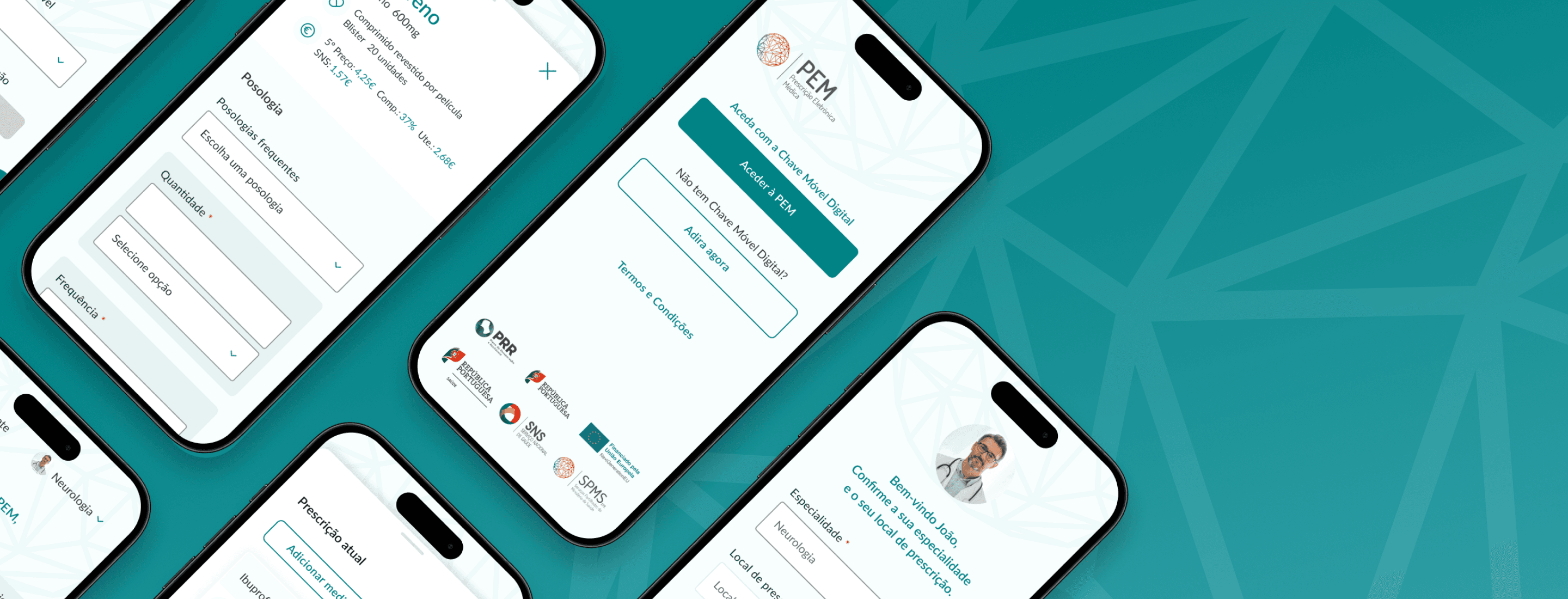
The PEM mobile application was designed to support doctors in time-critical
clinical contexts.
However, limited functionality and a complex interaction model made it difficult
to use in practice, especially in high-pressure scenarios.
My role focused on simplifying key workflows and reducing decision friction while working within strict time constraints.
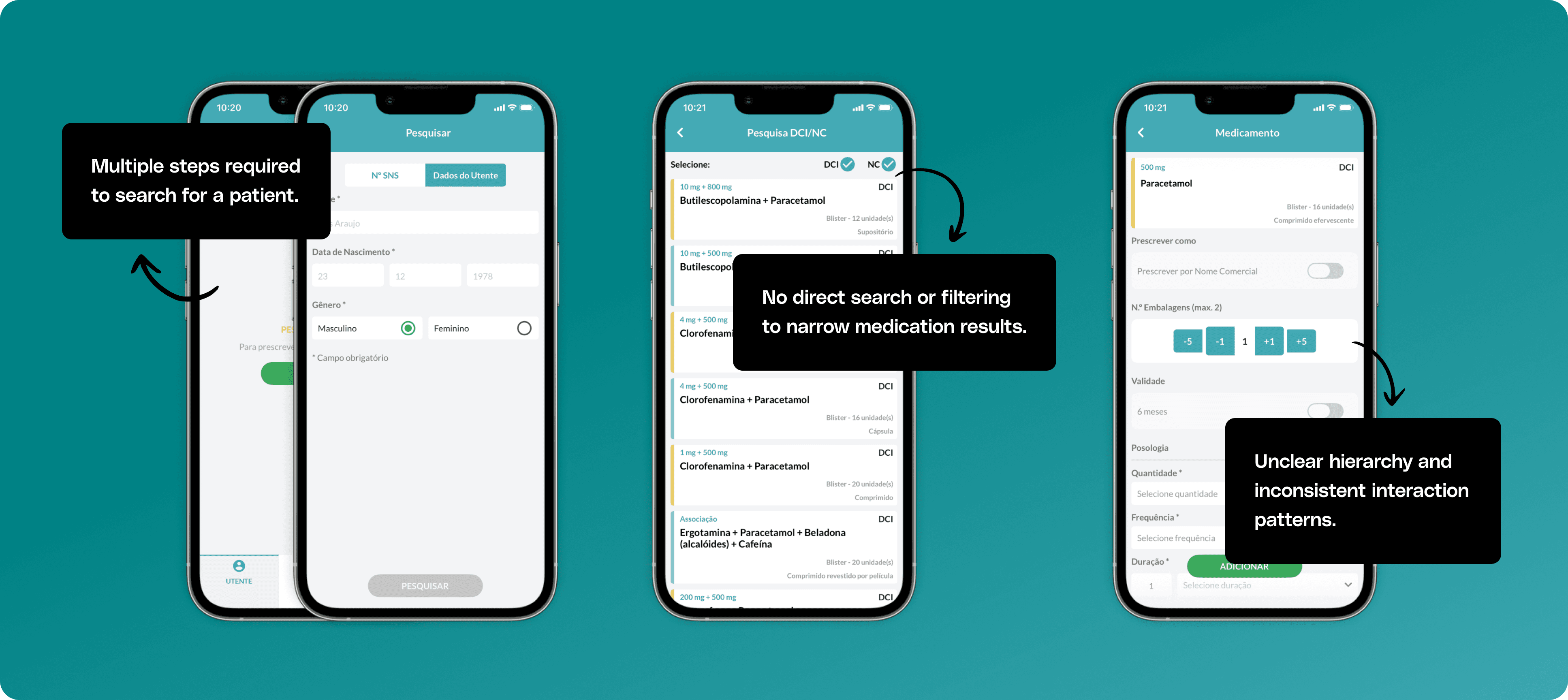
An app that doctors didn’t want to use.
The app offered only a fraction of the PEM web platform’s capabilities and was highly unstable, frequently crashing during use.
In time-critical scenarios, this made it unreliable to the point of avoidance.
This lack of adoption was reflected in an App Store rating below 2.
Working within constraints.
Due to tight timelines, no formal user research or usability testing was conducted.
To compensate, the process relied on close collaboration with two doctors embedded in the team and continuous validation with stakeholders.
This allowed for rapid UX/UI iteration cycles, focusing on simplifying high-frequency workflows and reducing decision friction in critical scenarios.
Designed and refined
through rapid iteration cycles.

Wireframe iterations
72
Screens delivered
1000+
User journeys defined
33
Net new components
12
Working under tight constraints, the redesign focused on simplifying high-frequency workflows and reducing decision friction.
The following examples show how these challenges were addressed.
User flow 1
Medication search:
faster and more confident
medication selection
Context
Medication search is a high-frequency, time-critical task.
Doctors need to quickly identify and prescribe the correct medication, often under pressure.
Problem
The original flow made it difficult to quickly narrow down and confirm the right medication.
Key Insight
The issue wasn’t speed, but the difficulty in reducing and validating results with confidence.
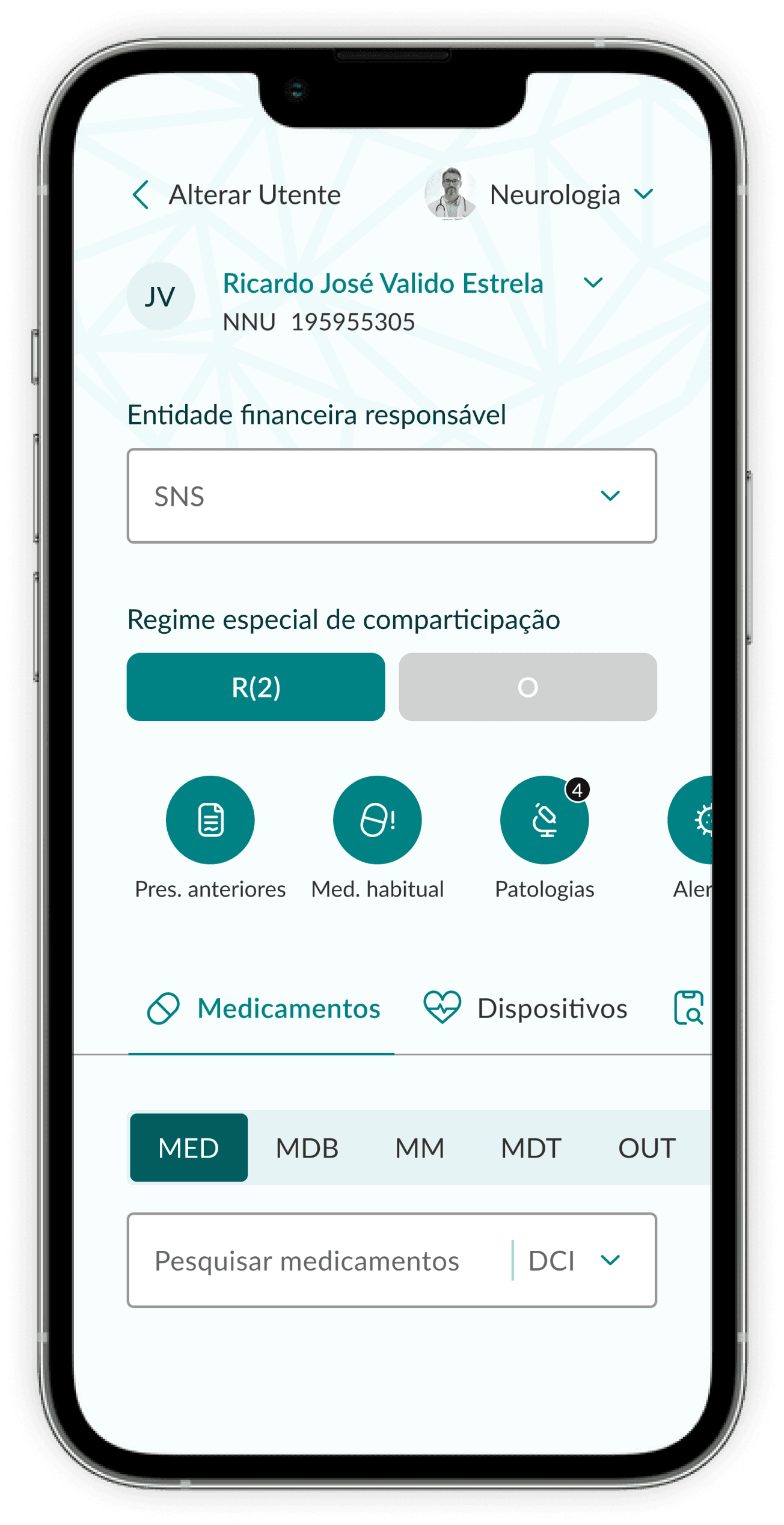
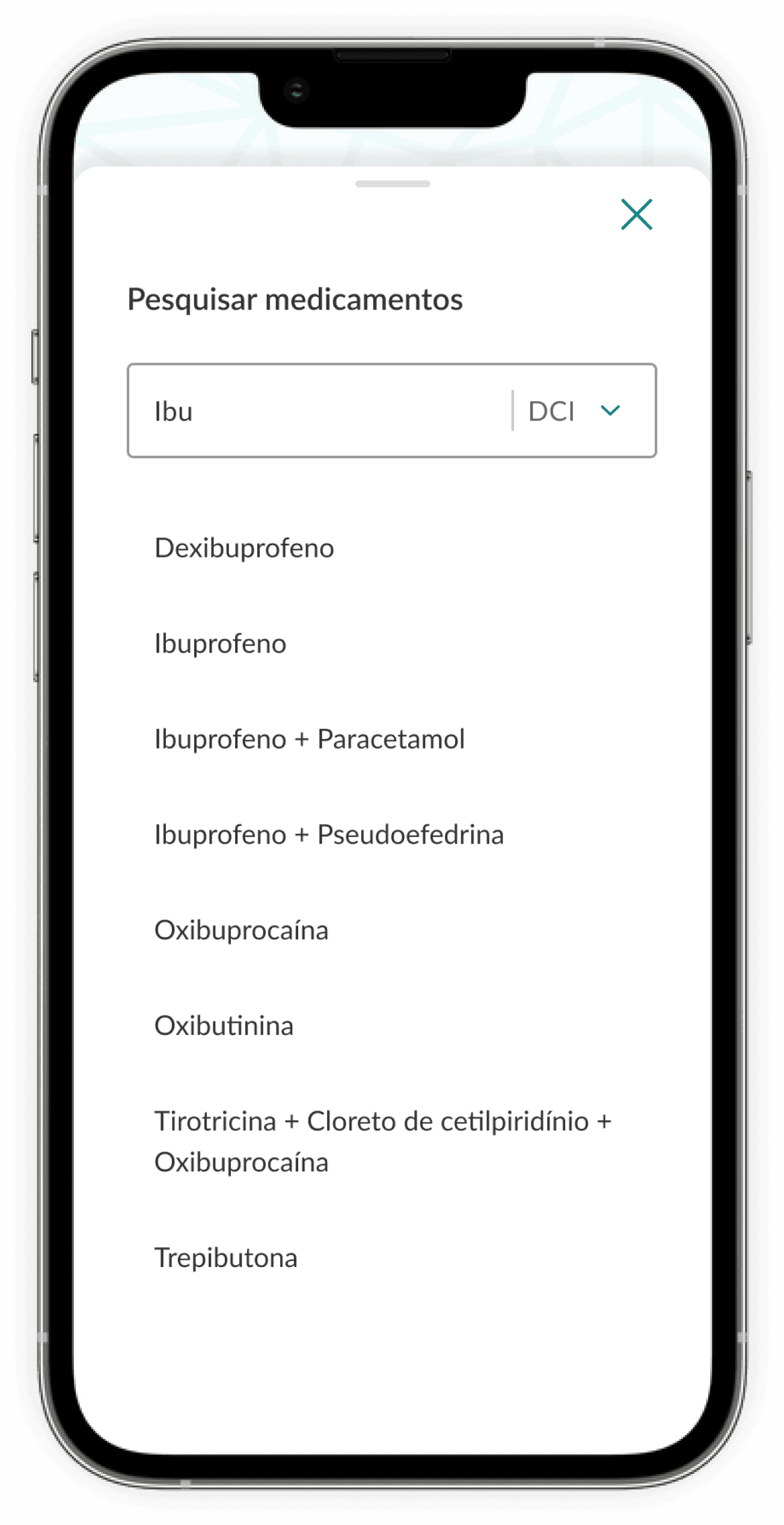
Quick access to categories and sub categories
of medication.
Suggested medication based on the user text input.
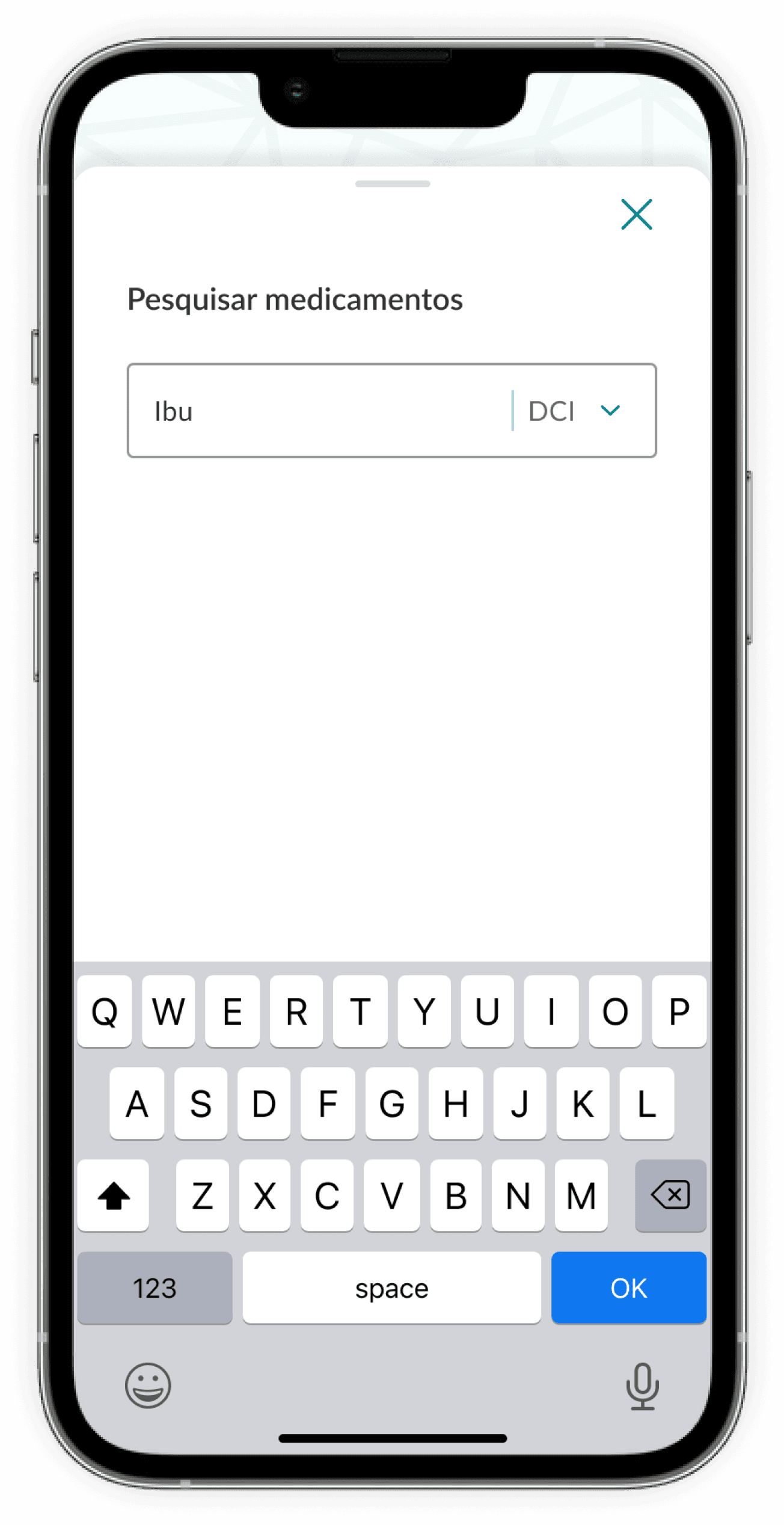
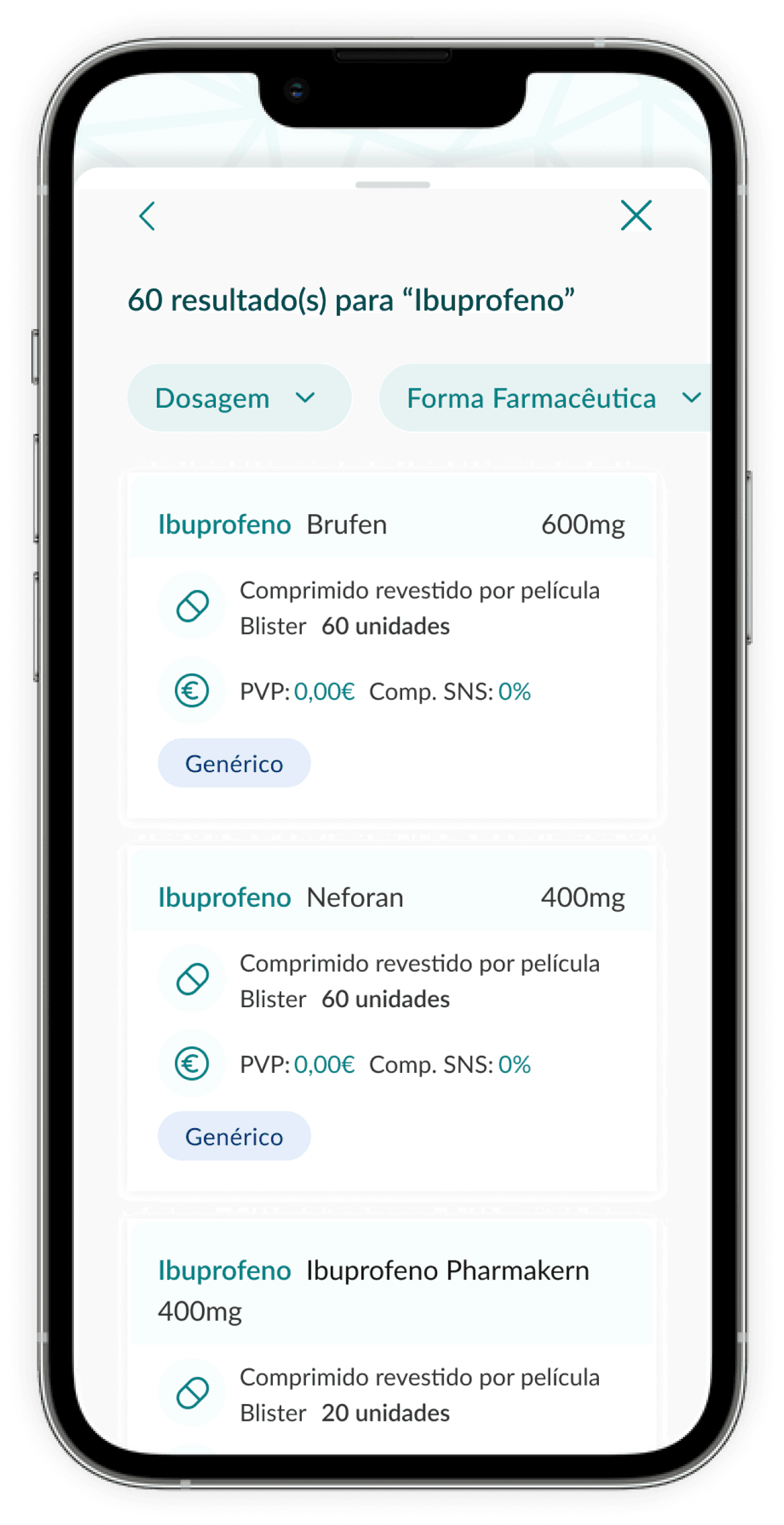
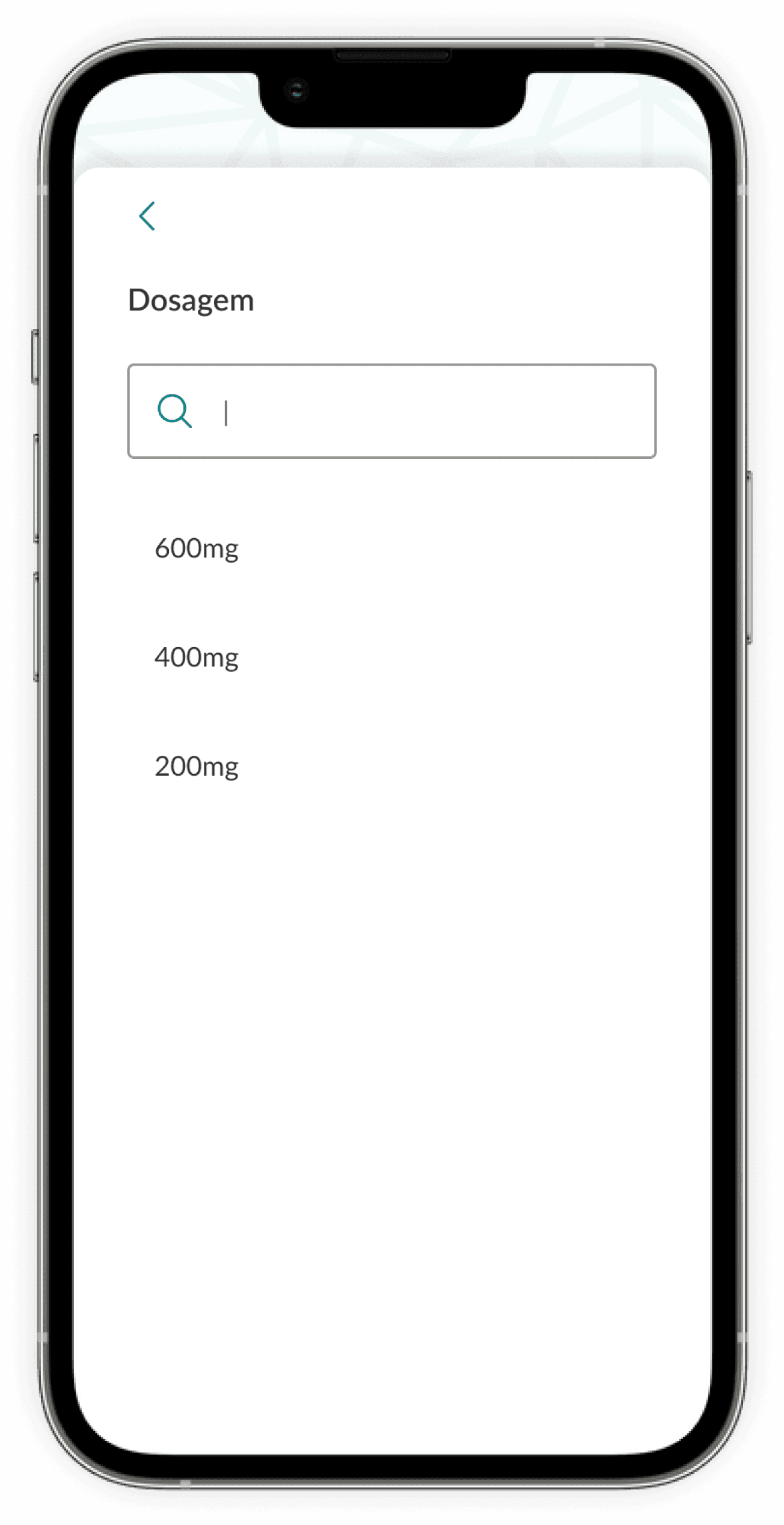
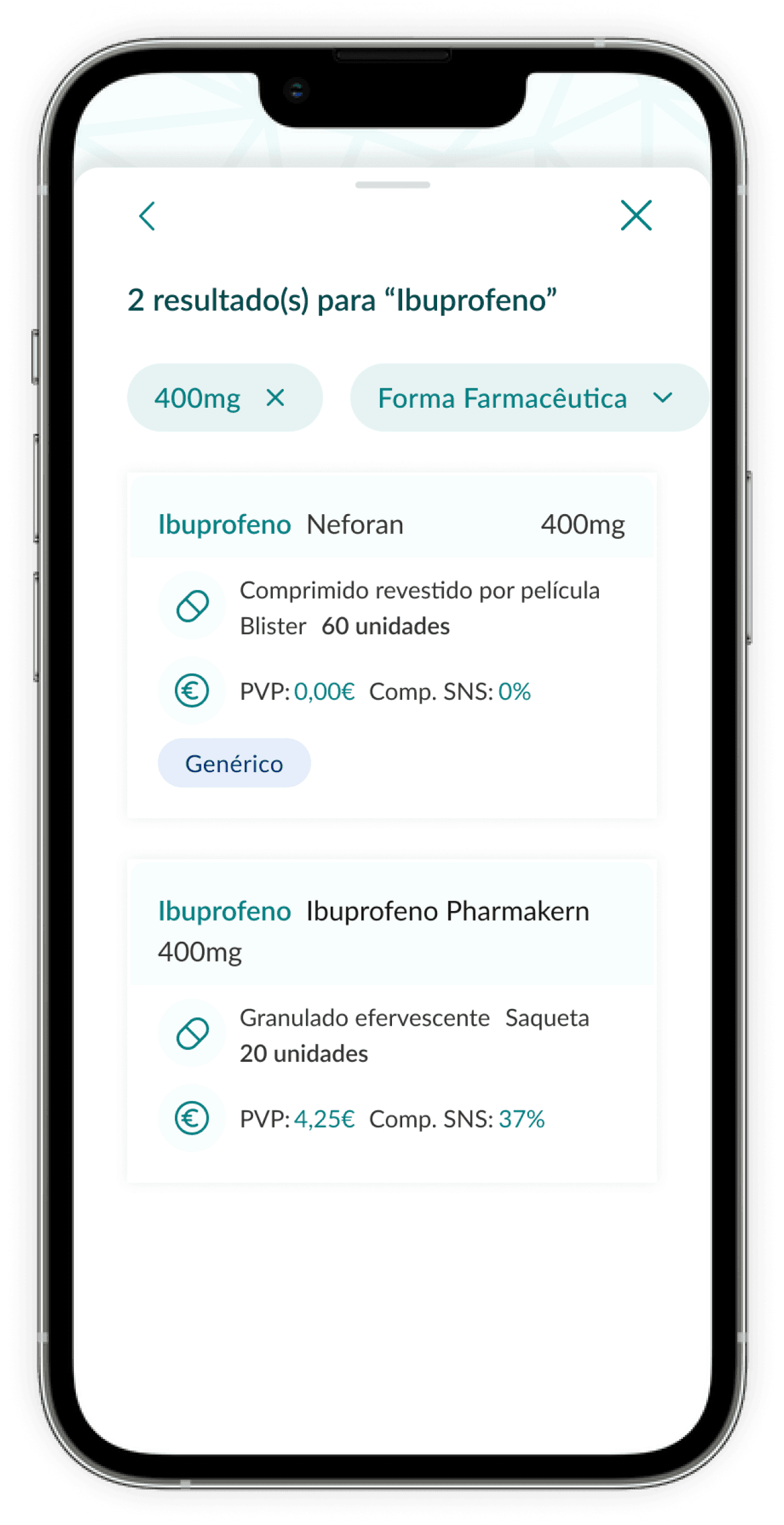
Filters to reduce the results for the user’s input.
Filter options according to user’s search.
Easily reset filters with
a single tap.
Expected outcome
Reduced decision friction by simplifying filtering and improving result clarity.
Enables faster and more confident medication selection in high-frequency tasks.
While the product is still in development, the redesigned flow is expected to:
Faster identification and confirmation of the correct medication.
Reduced cognitive load in a high-frequency task.
bility to narrow results with a single interaction.
Redesigned flow in
action

User flow 2
Previous prescriptions:
reducing repetition in high-frequency tasks
Context
Accessing previous prescriptions is a frequent task, especially for recurring treatments.
Doctors need a quick and reliable way to reuse existing information without repeating the full prescription process.
Problem
There was no access to previous prescriptions in the original app.
Key Insight
Doctors were forced to repeat the same prescription tasks, even in recurring cases.
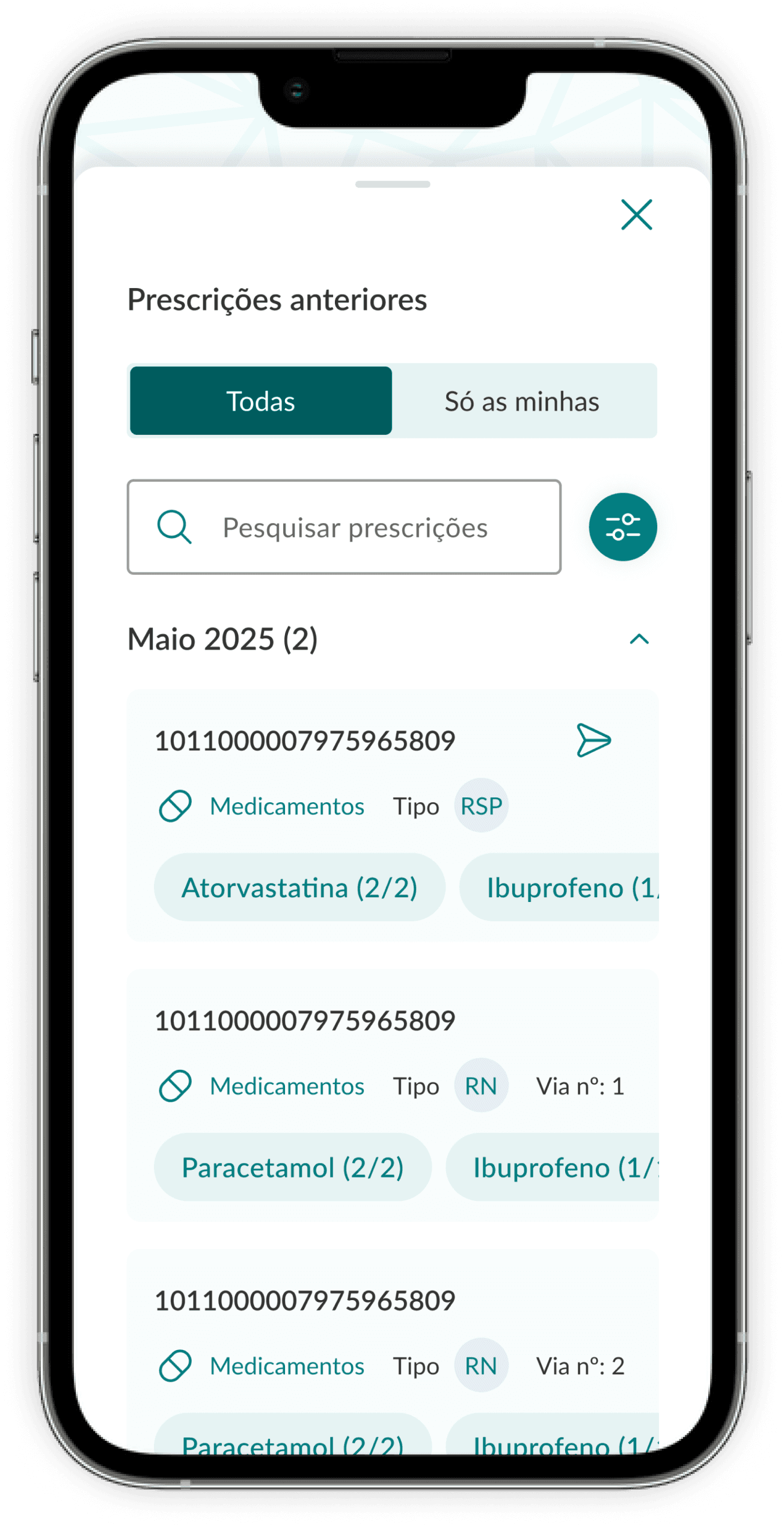
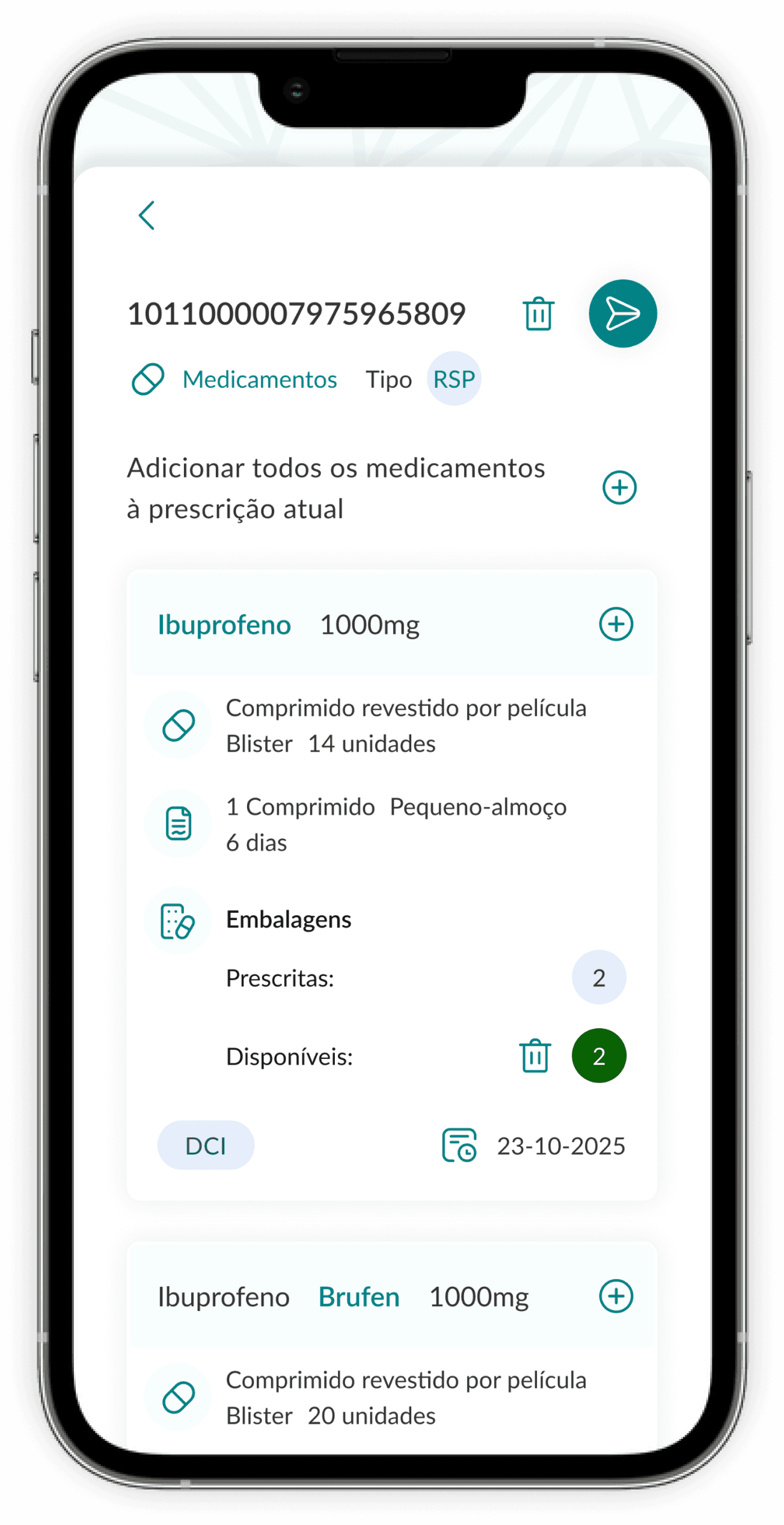
Quick access to previous prescriptions from the main page.
View medication
and quantity at a glance.
Reuse entire prescription in a single action.
Add medications without repeating manual input.
Filter between all
and personal prescriptions.
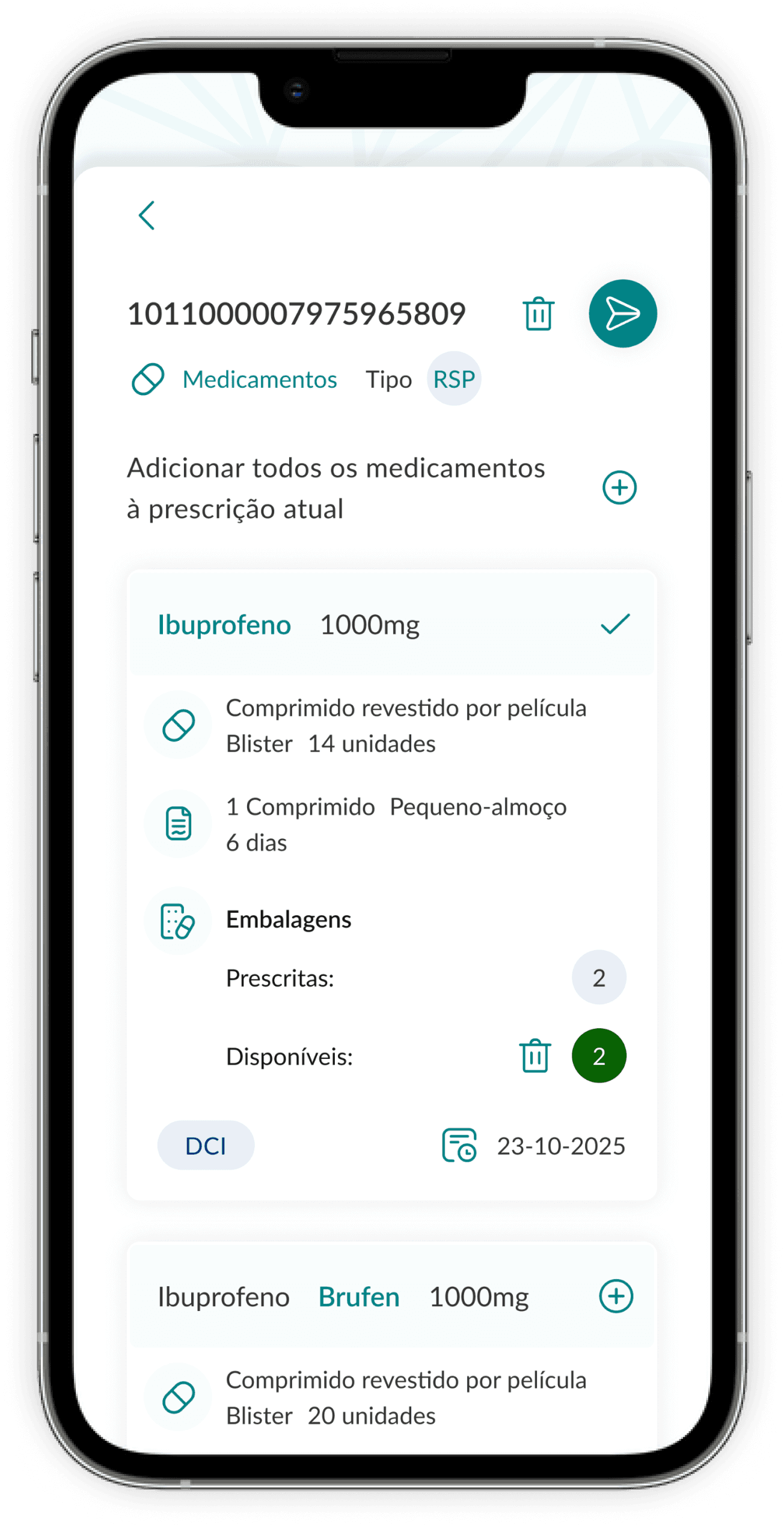
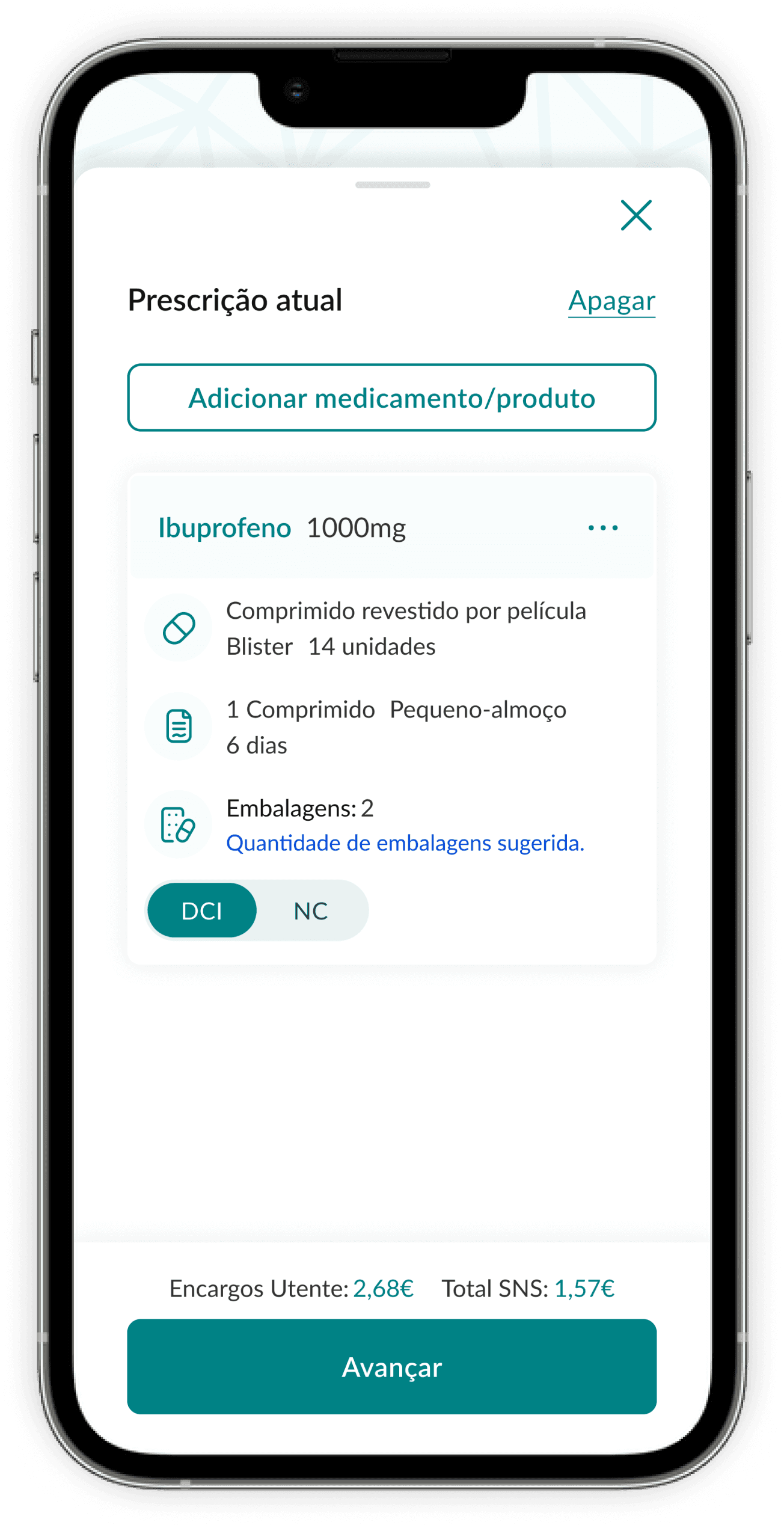
Medication added to the prescription.
Expected outcome
Enabled efficient reuse of previous prescriptions, eliminating repetitive steps in recurring workflows.
Faster access and reuse of previous prescriptions
Reduced need for repeated manual input
Lower cognitive effort in recurring treatment workflows
Redesigned flow in
action
Reflections
This project was both challenging and highly rewarding. Despite the ambitious timeline, solving complex problems under pressure made the experience particularly engaging.
Collaborating closely with doctors revealed that many common design patterns do not apply to medical prescription flows. This required constant discussion and adaptation, making the process both insightful and unique.
Skipping a structured discovery phase led to increased complexity later on, with several flows needing to be reworked as the team gained a deeper understanding of the system and business context.
Although initially scoped as a short-term delivery, the project evolved into a long-running effort — reinforcing the importance of treating complex systems as continuously evolving products.